
DevOps consulting services for teams whose deploys still hurt
DevOps consulting is advisory work with your hands on the keyboard. We audit how your code gets from a commit to production, fix what is slow or manual, and put the infrastructure in version control. Then we hand it back with the runbooks. Not a tool we resell. Not a platform you rent from us.

Trusted by engineering teams across 15+ countries - from startups to Fortune 500.




















What is actually slowing your delivery down
One person understands production. They built it by hand, none of it is written down, and they are the only one who can be paged.
Releases happen on a Friday night, by hand, with a rollback plan that is a chat message. So they happen rarely, which makes each one bigger.
The cloud bill grows every month and nobody owns it. No tags, no per-environment view, no idea which service is the problem.
Staging does not match production, so it proves nothing. Bugs are found by customers instead.
Your best engineers spend their week on infrastructure instead of the product. You are paying senior product rates for plumbing.
You have the tools already. Kubernetes, a CI runner, a monitoring dashboard nobody opens. The tools are not the problem.
Consulting that ends with a pipeline, not a slide deck
We work on your stack, in your repos, on your cloud account
A DevOps consultant looks at how your software gets from a commit to a customer, then removes the manual steps and the guesswork. Pipelines, environments, infrastructure as code, monitoring, on-call. The output is running automation plus the documentation for it, in your repositories.
DevOps consulting is not the same thing as a DevOps product. Search for “DevOps services” and you get Azure DevOps and AWS, because those are tools. We do not sell you a platform and we do not resell licences. We are the engineers who make the tools you already pay for actually work together.
And we leave. Every engagement ends with your team able to run what we built without us. If a consultant cannot explain the exit, they are selling a dependency. Ask for it in the first call.
Four ways teams buy this
Assessment and roadmap
You know it is slow but not why. We measure the pipeline, rank what is costing you most, and give you a sequenced plan. Fixed scope, no build commitment.
DevOps implementation services
The plan exists and nobody has time. We build the pipelines, write the Terraform, wire the alerts, and prove each piece in staging before it touches production.
DevOps automation services
Specific manual steps, removed one at a time. Release approvals, database migrations, certificate renewals, environment provisioning. Whatever your team does by hand on a schedule.
DevOps engineering services
Ongoing capacity. A named engineer inside your team for platform and delivery work, month to month, reporting to your lead rather than to us.
AWS, Azure and Google Cloud, with the same engineers either way
AWS DevOps services
ECS and EKS, CodePipeline or GitHub Actions into AWS, Terraform for everything underneath. Cost work through tagging and right-sizing, not reserved-instance guesswork.
Azure DevOps consulting
Azure Pipelines, AKS, Bicep or Terraform. If you are already inside the Microsoft estate we work with it, rather than proposing a migration you did not ask for.
Cloud DevOps consulting
GKE and Cloud Run on Google Cloud, or two clouds at once when an acquisition left you with both. Ansible for configuration, Helm and Argo CD where Kubernetes earns its keep.
Project, retainer, or a team that stays
Consulting project
A defined outcome with a start and an end. Move a monolith onto containers, replace a hand-built pipeline, get to infrastructure as code. Scoped up front, priced up front.
DevOps as a service
A monthly retainer for teams with no platform engineer and no plans to hire one. We run the pipeline and the infrastructure, you get the same engineers every month.
Managed and outsourced DevOps
Your platform function, run offshore from Ho Chi Minh City. Useful when you need cover across time zones, or when DevOps outsourcing is cheaper than a local hire you cannot find.
Looking for engineers inside your own sprints rather than a service around them? That is IT staff augmentation, and it is priced differently. If the question is whether your codebase is even ready to automate, start with a code audit.
The DevOps assessment
Most engagements start here, and some stop here. You get the findings whether or not you hire us to fix them.
How long a change takes to reach production
Measured from merge, not from standup. We read the last few months of your pipeline history rather than asking anyone to estimate it.
What is not in version control
Hand-built servers, console-clicked settings, secrets in a spreadsheet. Every one is a thing that cannot be rebuilt if it disappears.
What happens when it breaks at 2am
Who is paged, what they can see, and whether the last incident produced a written cause or a shrug. Alert noise counts as a finding.
Where the cloud bill goes
Per environment and per service, with the untagged spend called out separately. Idle non-production is usually the first thing we find.
| Criterion | InApps | In-house hire | Managed hosting |
|---|---|---|---|
| Time to start | Days. The team already exists | Months of searching, then notice period | Fast, but only for what they host |
| Scope of the work | Pipeline, infrastructure, monitoring, on-call | Everything, which is why the role is hard to fill | Their layer stops at the server |
| Access to your code | Yes. We change the build, not just the box | Yes | No. They will not touch your repository |
| What happens when they leave | Runbooks and handover sessions are the deliverable | The knowledge leaves with them | You cannot leave without a migration |
| Cost shape | Project fee or monthly retainer, either stops | Salary, plus recruitment, plus the risk of one person | Per resource, and it grows with your bill |
| Cloud cost work | In scope. We are not paid on your usage | In scope, if they have time | Against their interest |
| Breadth of experience | 750+ projects across three clouds | Deep in whatever their last job used | Deep in their own platform |
Read it, prove it, automate it, hand it over
Nothing goes near production until it has run somewhere else first.
Read what you have
Read-only access to the repository, the cloud account and the pipeline history. We report on what is there, not on what the diagram says is there.
Agree the order
Findings ranked by what they cost you now. You pick the first three. Anything we disagree on gets written down rather than quietly dropped.
Build it in the open
Pull requests into your repositories, reviewed by your engineers. Every environment defined in code. No shared credentials and no work done from a console nobody can audit.
Hand it over properly
Runbooks, a walkthrough with the people who will be paged, and a period where they drive and we watch. If your team cannot run it without us, the job is not finished.
The engineers who will hold your pager
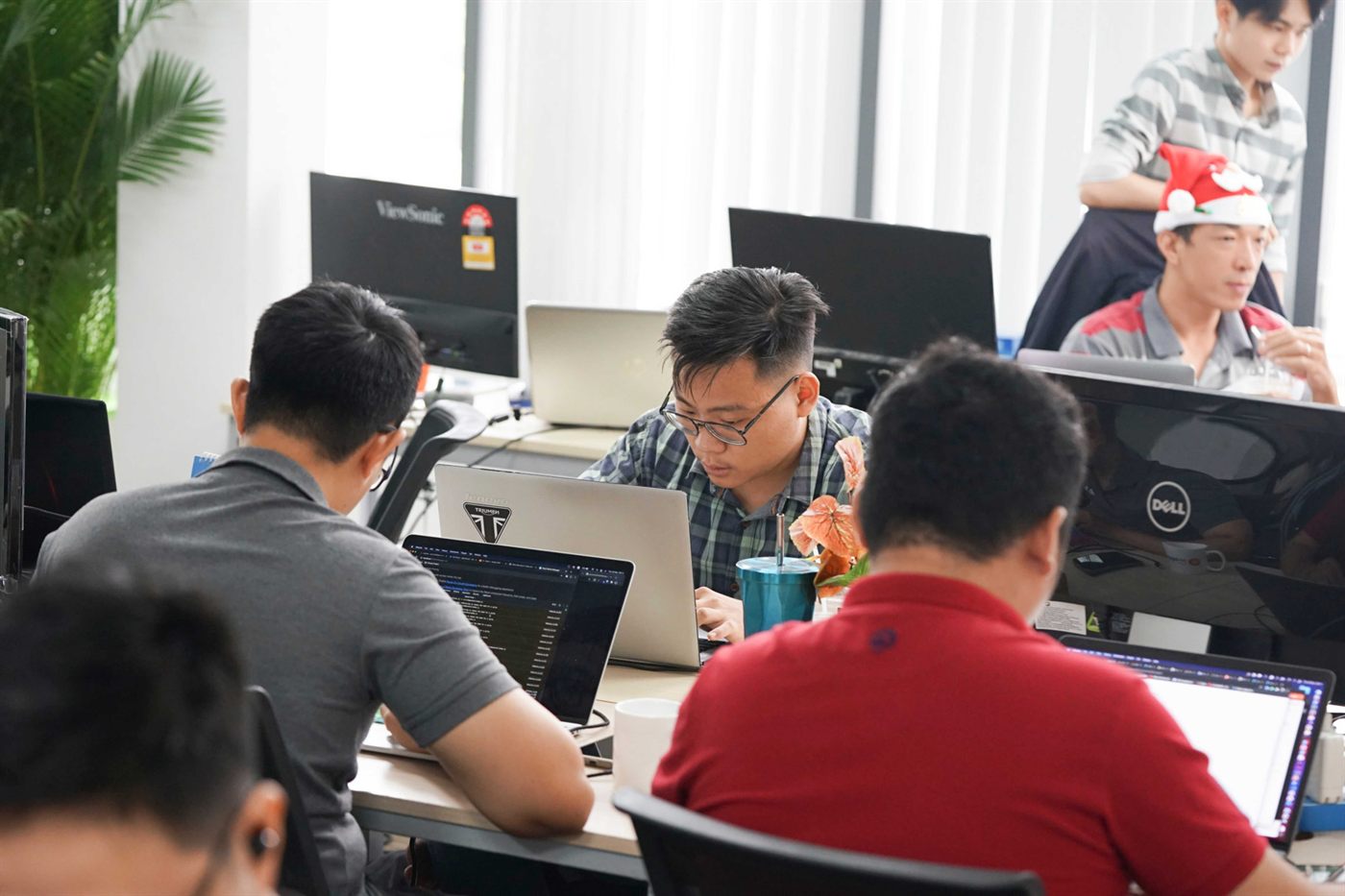
DevOps is not one generalist with root access. You meet whoever is staffed before the engagement starts, and they stay on it.
DevOps lead
- Your single point of contact
- Owns the sequence and says no to scope creep
- The standing call and the written decisions
Platform engineer
- Pipelines, environments and release mechanics
- Infrastructure as code, reviewed like application code
- Secrets handling and access policy
Cloud engineer
- Networking, identity and the account structure
- Cost visibility per environment and per service
- The migration path, when there is one
Reliability engineer
- Monitoring, alerting and the on-call rota
- Load and failure testing before you rely on it
- A written cause after anything that broke
DevOps support services, if you want us to stay on
What a support retainer covers
Optional, and priced separately from the build.
- The pipeline and the infrastructure we built, kept working
- On-call cover to the hours you agree, with a named engineer
- Runner, cluster and base-image upgrades before they go end of life
- Terraform and provider version bumps, reviewed not auto-merged
- Alert tuning, because a noisy pager gets ignored
- A written cause on anything that took production down
What we would rather leave you able to do
A retainer you do not need is the better outcome.
- Deploy without asking us, on any weekday
- Add a service to the pipeline by copying an existing one
- Rebuild any environment from the repository alone
- Read your own dashboards and know which number matters
- Onboard a new engineer without a call to Vietnam
What moves the price, and what we will not quote blind
We scope before we price. Anyone quoting DevOps work off a form has not looked at your pipeline.
| Driver | Why it moves the number |
|---|---|
| How many environments are real | One production and one staging is a different job from nine environments, three of which nobody can account for. |
| How much is already in code | Existing Terraform we can extend is cheap. A hand-built estate has to be read, documented and then reproduced before anything improves. |
| Whether you can stop shipping | Migrating with zero downtime while feature work continues costs more than a weekend cutover. Most teams cannot stop, and we plan for that. |
| What compliance you carry | Audit trails, separation of duties and evidence for a certification add real work to a pipeline. They also make it better. |
| Whether cloud spend is in scope | Cloud cost optimization services can pay for the engagement, but the analysis is work in itself and we bill it as work, not as a share of savings. |

What clients say about working with us
Every quote below is from a verified review. None of them were written by us.
“Clear expectations, rules that actually hold, delivered on time. And the people are genuinely easy to work with, not just professionally, but as humans.”
When to call us, and when to call someone else
A good fit
- You ship a real product and releases have become the slow part
- Infrastructure was built by hand, by someone who has left or is about to
- You are on AWS, Azure or Google Cloud and want to stay there
- The cloud bill is growing faster than usage and nobody can say why
- You want your own team able to run it afterwards, not a permanent vendor
- You have the tools already and need them to actually work together
Not a fit
- You want engineers inside your own sprints. That is IT staff augmentation
- You need a test suite built from zero. That is QA and test automation
- You are deciding whether to rewrite. Start with a code audit
- You need a live product kept running, not its pipeline rebuilt. That is software maintenance
- You want a platform licence rather than engineers. Buy it from the vendor, we will help you use it
Answered without the hedging
Not sure what you need yet?
Send the stack, the cloud you are on, and how a release happens today. We will tell you what we would change first, including when the answer is nothing.
Book a DevOps reviewWhat are DevOps consulting services?
What does a DevOps consultant do?
How is this different from Azure DevOps or AWS DevOps?
Do we need Kubernetes?
Will you work in our repositories and our cloud account?
What do we actually own at the end?
How does the time zone work?
Can you take over infrastructure a previous vendor built?
Tell us how a release happens today
The stack, the cloud you are on, and who pushes the button. We come back with what we would change first, in what order, and what it costs. If your pipeline is already fine, we will tell you that instead.