
On this page
TL;DR: Staff augmentation adds named individual engineers to a team you already manage. A dedicated team is a self-contained squad — engineers, QA, and a delivery lead — managed by the provider. The core difference is not team size or contract length: it is who owns delivery management. Augmentation requires your internal tech lead to direct the work. A dedicated team does not. Most industry benchmarks put the break-even at 3+ engineers sustained for 9–12 months.
What Is the Core Difference Between Staff Augmentation and a Dedicated Team?
Both models bring external engineering capacity into your organisation. The distinction is who manages execution day-to-day.
In staff augmentation, individual engineers join your existing team. They attend your standups, commit to your repository, and report to your engineering manager. You set priorities, assign tickets, and run code review. The provider handles employment, payroll, and compliance — everything operational. Management stays entirely with you.
In a dedicated team, a self-contained squad is assembled and managed by the provider. You provide product vision and priorities; the team — with its own delivery lead, QA, and sometimes a PM — owns the how. You manage the roadmap, they manage the mechanics.
“Choose wrong and you either drown your internal managers in coordination work, or hand off a project to a team with no context to run it.” — Ramon Nuila, Codebrand Engineering Intelligence, July 2026
The practical test: if the engineers attend your daily standup and report to your tech lead, it is augmentation. If they report to a delivery lead from the provider and you see output at sprint review, it is a dedicated team.
Staff Augmentation vs Dedicated Team: Side-by-Side Comparison
| Criterion | Staff Augmentation | Dedicated Team |
|---|---|---|
| Who manages daily work | Your engineering lead | Provider’s delivery lead |
| Who owns the process | You | The provider |
| Who sets priorities | You (sprint by sprint) | You (roadmap level) |
| Point of contact | Each engineer directly | One delivery lead or PM |
| Cross-functional roles (QA, PM) | You supply them | Included in the team |
| IP ownership | 100% yours from first commit | 100% yours from first commit |
| Typical team size | 1–5 engineers | 3–20 engineers |
| Engagement duration | 3–18 months (specific gap) | 6 months+ (ongoing product) |
| Time to first commit | 1–2 weeks | 4–6 weeks |
| Management overhead on your side | 15–25% of a tech lead’s time per engineer | 5–10% of your time total |
| Ramp-up burden | Falls on your internal managers | Absorbed by the provider’s delivery lead |
| Flexibility to add one specialist | Very high — 2 weeks’ notice | Moderate — requires team restructure |
| Best when | Specific gap, strong internal leadership | Ongoing product, limited eng management capacity |
| Exit terms (InApps) | 2 weeks’ notice | 30 days’ notice |
| Cost structure | Per engineer monthly | Monthly retainer (bundled) |
| Break-even point | Up to ~2 engineers, under 9 months | 3+ engineers, 9–12+ months |
When to Choose Staff Augmentation
Staff augmentation is the right model when your team knows what to build, has the leadership to direct incoming engineers, and needs execution capacity — not management infrastructure.
Strong internal tech lead exists. This is the single non-negotiable prerequisite. Stratagem Systems’ 2026 analysis of 100+ client engagements found that augmentation requires 15–25% of a manager’s time per engineer. For four engineers, that is the equivalent of one full-time manager. If that capacity already exists — and is not fully allocated — augmentation is the faster, more transparent path.
The need is specific and time-bound. A platform migration needs a cloud architect for five months. A mobile launch needs two React Native engineers for a six-month sprint. A compliance deadline needs a security specialist immediately. These are bounded needs with defined endpoints. Augmentation matches them exactly; a dedicated team adds team infrastructure you would not need after the initiative ends.
The work requires deep integration with your core team. When augmented engineers need to pair with your internal leads daily, share context continuously, and contribute to architectural decisions, augmentation’s direct-report structure creates that integration. A dedicated team’s separate delivery layer introduces a communication gap at exactly the point where proximity matters most.
Scope evolves fast. Augmentation re-prioritises with your backlog. Change the sprint goals on Monday; the engineers follow. A dedicated team absorbs scope changes within their own delivery process — useful when you want buffer, less useful when you need immediate pivot.
When to Choose a Dedicated Team
A dedicated team earns its place when the work is ongoing, the scope is product-level rather than feature-level, and your internal organisation cannot absorb the management overhead of directing individual external engineers.
You need a full squad immediately, not individual roles. Assembling your own combination of engineers, QA, and a PM takes time and coordination. A dedicated team provides a matched, cross-functional group assembled and onboarded as a unit. 4–6 weeks to a running squad versus 1–2 weeks per individual for augmentation — the gap narrows when you need multiple roles simultaneously.
Internal engineering management is at capacity or absent. If your CTO is building as well as managing, or if you are a product founder without a technical lead, directing augmented engineers is a management tax you cannot afford. A dedicated team’s delivery lead takes that responsibility. You define what needs building; the team figures out how.
The engagement runs 12+ months. Short-term augmentation has a ramp-up cost — two to four weeks for an engineer to reach full sprint contribution on an unfamiliar codebase. Amortised over eighteen months, this is a small fraction of total engagement value. Over three months, it is significant. The dedicated team model trades faster ramp-up cost for a slightly longer initial assembly period, then operates with continuity that preserves context month to month.
Knowledge continuity matters more than individual flexibility. When one engineer leaves an augmented engagement, context leaves with them unless documentation was built in deliberately. A dedicated team’s continuity — QA, delivery lead, and engineers working together over months — creates collective ownership of the codebase that survives individual rotation. At InApps, 92% of engineers on dedicated teams are still on the same team after twelve months.
Cost Comparison: What Each Model Actually Costs
The headline difference is billing structure: augmentation is per-engineer monthly; a dedicated team bundles engineers, QA, and delivery lead into a retainer. But the real cost comparison runs on management overhead included or excluded.
| Cost Element | Staff Augmentation | Dedicated Team |
|---|---|---|
| Engineer rate (Vietnam senior, InApps) | $30–50/hr per engineer | Bundled retainer (lower per-head) |
| QA engineer | You provide internally | Included |
| Delivery lead / PM | You provide internally | Included |
| Your internal management time | 15–25% per engineer | 5–10% total |
| Hidden management cost (4 engineers) | Equivalent to 1 full-time manager | Minimal |
| Ramp-up per individual | 1–2 weeks | 4–6 weeks for full team |
| Break-even (management cost included) | Cheaper for 1–2 engineers, under 9 months | Cheaper for 3+ engineers, 9+ months |
| Exit cost | 2 weeks’ notice | 30 days’ notice |
The rule of thumb confirmed by Codebrand (July 2026): if your internal team has unused management capacity, augmentation is cheaper in true total cost. If you would need to hire or redirect a manager specifically to run augmented engineers, the dedicated team’s bundled management layer makes it cheaper in practice.
The three most common mistakes on cost:
- Comparing headline hourly rates without counting your own management time.
- Choosing augmentation for 4+ engineers without a dedicated internal lead — creating 60–100% management load on one person.
- Choosing a dedicated team when your engineers want direct control, then paying for a PM layer you override anyway.
The 4-Question Decision Framework
Answer these four questions in order. The first clear signal wins.
1. Do you have internal engineering leadership with capacity to direct the work?
- Yes → augmentation is viable. Move to question 2.
- No → dedicated team. Stop here.
2. How many engineers do you need, and for how long?
- 1–2 engineers, under 9 months → augmentation.
- 3+ engineers, 9+ months → dedicated team likely cheaper in TCO.
- Mixed or uncertain → consider a hybrid (see below).
3. Does the work require daily integration with your core team?
- Yes → augmentation (direct-report structure creates tighter integration).
- No → dedicated team is viable; scope and management overhead drive the choice.
4. Do you need QA and PM included, or do you already have them?
- Need them included → dedicated team.
- Already have them → augmentation is simpler and cheaper.
Red Flags When Evaluating Each Model
| Red Flag | What It Signals | What to Ask |
|---|---|---|
| Provider uses “staff augmentation” and “dedicated team” interchangeably | They are selling the same product with two labels | “Who does each engineer report to: me or your PM?” |
| Dedicated team has no named delivery lead | You are buying individual engineers with a different contract, not a managed team | “Who runs daily standups and owns sprint delivery?” |
| Augmentation provider cannot shortlist in under a week | Thin bench — not a pre-vetted pool | “How many engineers at my stack level are currently vetted and available?” |
| Dedicated team ramp-up quoted at “same-day” | The team is not actually assembled; you are buying bench capacity | “Are the specific engineers named before I sign?” |
| No replacement guarantee on either model | Vacancy risk lands entirely on you | “What is your replacement timeline if an engineer leaves?” |
| Dedicated team blocks direct access to individual engineers | You will communicate through a PM filter, not with the people building your product | “Can I run a technical call with any engineer on my squad?” |
The Augment-First Path: From Staff Aug to Dedicated Team
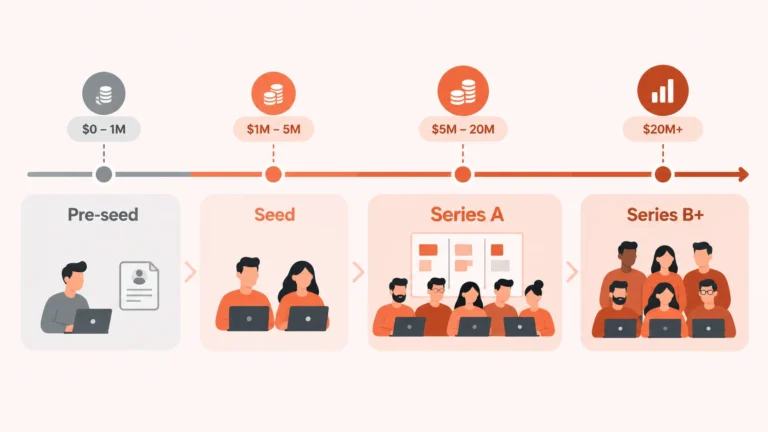
One of the most efficient sequences for growing engineering organisations is to start with augmentation and expand into a dedicated team as the roadmap grows.
Phase 1 — Augmentation (months 1–6): Place one or two senior engineers into your sprint. Validate the engagement model, the provider’s vetting quality, and the cultural fit. Full control stays with your internal lead. Cost and risk are low.
Phase 2 — Expand (months 6–12): If the roadmap justifies it, add engineers up to three to five. At this point, your internal management load is significant — 15–25% per engineer. Evaluate whether converting to a dedicated team structure (with a provider delivery lead) reduces that load while preserving throughput.
Phase 3 — Dedicated team or ODC (12+ months): For ongoing product development past twelve months with a stable squad, a dedicated team provides continuity, bundled QA, and collective knowledge. For twenty or more engineers working long-term, an Offshore Development Center — a branded engineering branch in Vietnam — provides the full structure of a captive centre without the overhead of entity registration.
At InApps, the same provider covers all three phases. Starting with one augmented engineer and growing to a full ODC happens within the same relationship, with the same vetting standards, the same access controls, and the same IP assignment terms.
How InApps Positions Both Models
InApps runs both and will tell you which one fits on the first call — including when neither is right.
IT Staff Augmentation: Named senior engineers in your sprint in 1–2 weeks. They report to your engineering lead, work in your tools, and follow your definition of done. 3% of applicants pass the four-stage vetting process. 94% client re-engagement rate. Two weeks’ notice to scale in either direction. IP assigned from the first commit.
Dedicated Software Development Team: A cross-functional squad assembled and managed for your product in Ho Chi Minh City. Engineers, QA, and a delivery lead. You set the technical direction and priorities; the team owns execution. 4–6 weeks to a running squad. 92% of engineers still on the same team after twelve months. 60–70% below equivalent US/EU rates.
Offshore Development Center: For twenty or more engineers working long-term under your brand. Your engineering branch in Vietnam — fully managed, 100% yours — without registering a Vietnamese entity. The three-to-four year path from augmentation through dedicated team to ODC is one InApps has run with multiple clients.
“Quality engineers, proposed within days. But what actually made the difference was the culture fit — they worked like they were part of our team from day one.” — Engineering Leader, Future Processing (InApps client)
InApps holds ISO 27001:2022 certification, 85%+ multi-year client retention, and 4.9/5 on Clutch from 50+ verified reviews. 750+ projects delivered since 2016 across 15+ countries.
Not sure which model fits right now? Book a 30-minute discovery call → — we will map the structure and tell you plainly if augmentation, a dedicated team, or something else fits your situation.
Frequently Asked Questions
What is the main difference between staff augmentation and a dedicated team?
The core difference is who owns delivery management. In staff augmentation, your engineering lead directs the work — engineers join your team, report to you, and work inside your processes. In a dedicated team, a provider delivery lead owns execution — you set the roadmap and priorities, the team manages sprints, code review, and delivery. The model you need depends on whether you have the internal management capacity to direct individual engineers.
Which is more expensive: staff augmentation or a dedicated team?
Staff augmentation appears cheaper on a per-hour basis, but the true cost includes your internal management overhead — 15–25% of a tech lead’s time per augmented engineer. A dedicated team bundles QA and a delivery lead into the retainer, which looks more expensive per line item but removes that internal overhead. For 1–2 engineers under nine months, augmentation is cheaper in total cost. For 3+ engineers at 9–12+ months, a dedicated team typically delivers lower total cost of ownership.
At what point does a dedicated team make more sense than staff augmentation?
Most industry benchmarks (Stratagem Systems 2026, DEV Community, Codebrand July 2026) put the break-even at three or more engineers sustained for nine to twelve months. Below that threshold — especially for one to two engineers on a specific short-term gap — augmentation is the leaner, faster option. Above it, the bundled management structure and team continuity of a dedicated model deliver better economics.
Can I switch from staff augmentation to a dedicated team later?
Yes, and it is one of the most common growth paths. A typical sequence: start with one to two augmented engineers to validate provider fit and codebase integration; expand to three to five engineers; convert to a dedicated team structure with a delivery lead as the management load grows. At InApps, this transition happens within the same relationship without re-onboarding or a new vetting cycle.
Does a dedicated team mean I lose control over the engineers?
No — you retain full technical direction, architecture decisions, and roadmap ownership. The delivery lead from the provider manages execution mechanics (daily standups, sprint ceremonies, blockers) but does not override your technical decisions. You still interview and approve every engineer on the team before they start. The difference is that you are talking to one delivery lead about delivery status rather than managing each engineer directly.
How long does it take to get a dedicated team running vs staff augmentation?
Staff augmentation: 1–2 weeks to first pull request for a single engineer from a pre-vetted pool. A dedicated team: 4–6 weeks to assemble the full squad, complete onboarding, and reach sprint velocity. In 2026 some providers quote 3–7 day ramp-up for dedicated teams (DEV Community), but verify directly — the claim varies and depends heavily on bench depth.
What happens to IP when the engagement ends?
Under both models at InApps, IP is assigned to you from the first commit — not gated behind final payment or contract end. Code lives in your repository throughout the engagement. At the end of a dedicated team engagement you receive full source, architecture documentation, and a handover session with your engineers. There is no asset held by the provider.
Key Takeaways
- Staff augmentation: you manage individuals. Dedicated team: provider manages a squad, you manage the roadmap.
- Break-even: 3+ engineers, 9–12+ months → dedicated team typically cheaper in true TCO.
- Single biggest signal: do you have internal engineering leadership with capacity to direct the work? Yes = augmentation viable. No = dedicated team.
- Management overhead: augmentation costs 15–25% of a tech lead’s time per engineer; dedicated team costs 5–10% of your time total.
- Both models at InApps assign IP from the first commit, with no minimum-term trap and named engineers you interview before they start.
- The smartest path for growing teams: augment first, convert to dedicated as the squad grows, expand to ODC at twenty+ engineers.
Work with us
Need a team that can do this on your codebase?
Tell us what you are shipping and we will send back a scope, a team shape and a fee. No obligation.
Book a free call